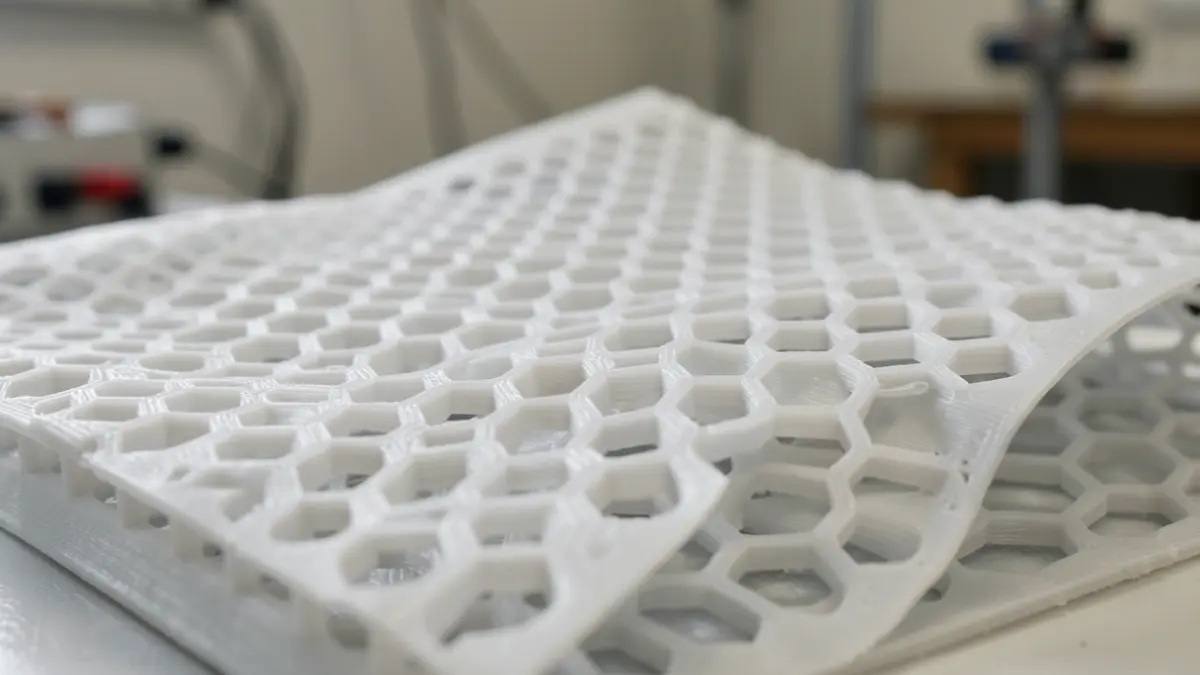
These sheets, made from thermoplastic polyurethane (TPU), are placed at the bottom of packaging boxes to absorb vibrations and impacts. The internal structure of the one-centimeter-high pieces helps cushion the energy from shocks, protecting the strawberry's delicate skin and minimizing bruising, weight loss, and changes in appearance that affect its commercial value.
Researcher Sergio Bayano Tejero from the University of Córdoba explains that the problem of strawberry degradation often occurs before reaching points of sale, due to incidents like bumps on rural roads that directly impact the fruit.
A study published in the journal Food Packaging and Shelf Life compared traditional corrugated cardboard packaging with TPU sheets and a combination of both. Results showed that the TPU sheets reduced impact accelerations by three to four times compared to conventional cardboard. In laboratory tests, they absorbed over 21% of vibrations, versus about 3% for cardboard.
Real-world transport tests on rural roads confirmed these findings. Strawberries protected by the sheets suffered approximately four times less damage, with fewer bruises, less weight loss, and better color preservation in the days following transport.
The material is still under study for commercial implementation. Researchers will analyze its economic viability, reusability, cleaning, recyclability, and industrial-scale cost. They also plan to optimize the design and adapt it for other sensitive fruits like blueberries, cherries, or grapes. The work received funding from the Regional Ministry of University, Industry, Energy, and Innovation of the Junta de Andalucía.