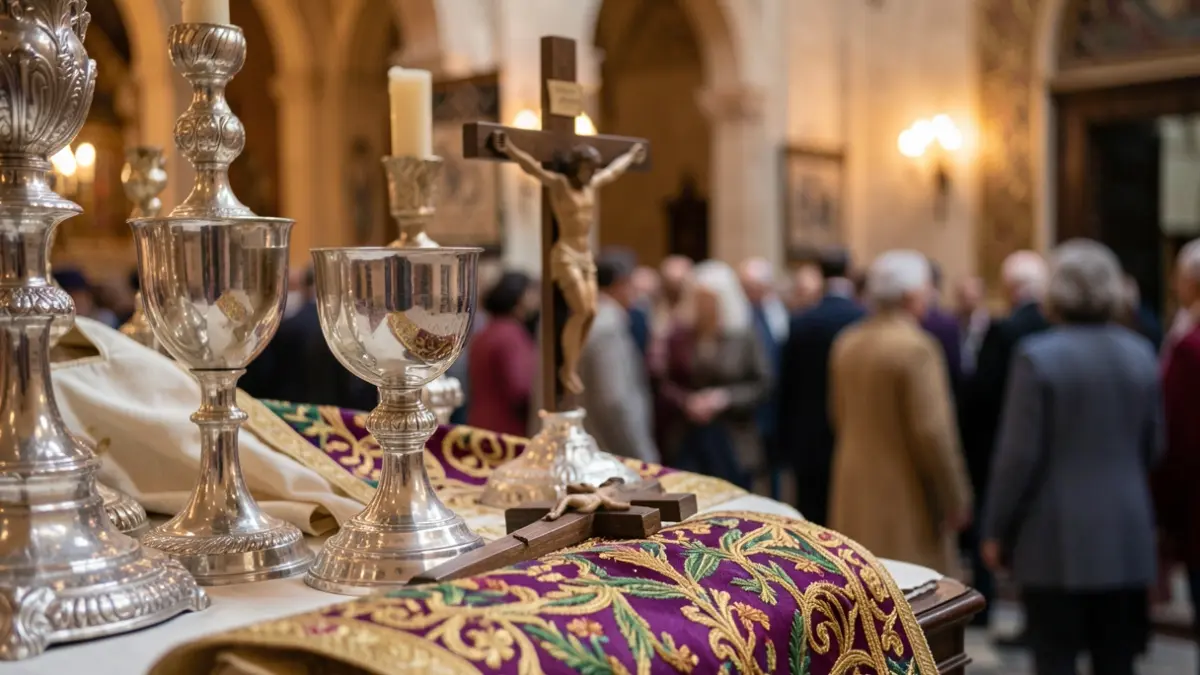
The president of the Provincial Council of Córdoba, Salvador Fuentes, detailed that the subsidized works, which must be carried out during 2027 and justified by March 31, 2028, cover a wide variety of assets. These include titular and processional images, floats, thrones, palanquins, banners, robes, tunics, poles, candelabra, lanterns, and goldsmith pieces, among other elements of great artistic and historical value.
Fuentes highlighted the importance of these grants, not only for the recovery of pieces but also for the economic impact they have on the towns, supporting specialized artisanal trades such as art historiography, gilding, goldsmithing, or embroidery. He emphasized that the province has a highly prestigious artisanal fabric and that these subsidies represent a cultural investment with an economic return.
Compared to previous years, the calls have been increasing: in 2024, €650,000 were allocated for 69 interventions, and in 2025, €1,246,714 granted 112 aids. The current subsidies cover up to 80% of the project, with a limit of €20,000.
In total, the Provincial Council has allocated €3,267,286.91 over the last three years to this line of aid, resulting in 295 actions for the recovery of cofrade heritage. Fuentes also highlighted the social work of the cofrade community, which translates into significant economic development for the province, especially during Holy Week, mobilizing 20% of the hospitality sector.
Specific examples of heritage to be restored thanks to these grants were mentioned, such as the Virgen de las Viñas in Montilla, the Nazarene's tunic in Palma del Río, the Virgen de los Ángeles in Hornachuelos, Jesús del Calvario in Córdoba, Cristo de la Clemencia of the Hermandad de los Dolores, the float of Cristo de Ánimas, and the float of Cristo de Gracia in the capital.