AlmeríaCádizCórdobaGranadaHuelvaJaénMálagaSevillaAlpujarra AlmerienseLos VélezComarca Metropolitana de AlmeríaFilabres-TabernasLevante AlmeriensePoniente AlmerienseValle del AlmanzoraBahía de CádizCampiña de JerezCampo de GibraltarCosta NoroesteLa JandaSierra de CádizAlto GuadalquivirCampiña de BaenaCampiña Sur CordobesaLos PedrochesCórdoba (comarca)SubbéticaValle del GuadiatoValle Medio del GuadalquivirAlpujarra GranadinaComarca de AlhamaComarca de BazaComarca de GuadixComarca de HuéscarComarca de LojaCosta GranadinaLos MontesValle de LecrínVega de GranadaEl AndévaloEl Condado de HuelvaCosta OccidentalCuenca MineraComarca Metropolitana de HuelvaSierra de HuelvaÁrea Metropolitana de JaénCampiña de JaénEl Condado (Jaén)La LomaSierra de CazorlaSierra MáginaSierra MorenaSierra de SeguraSierra Sur de JaénLas VillasComarca de AntequeraLa AxarquíaGuadaltebaCosta del Sol OccidentalMálaga Costa del SolNorormaValle del GuadalhorceSerranía de RondaSierra de las NievesAljarafeBajo GuadalquivirCampiña de CarmonaCampiña de Morón y MarchenaComarca de ÉcijaComarca Metropolitana de SevillaSierra Norte de SevillaSierra Sur de SevillaVega del GuadalquivirAlmeríaCádizCórdobaGranadaHuelvaJaénMálagaSevillaAlpujarra AlmerienseLos VélezComarca Metropolitana de AlmeríaFilabres-TabernasLevante AlmeriensePoniente AlmerienseValle del AlmanzoraBahía de CádizCampiña de JerezCampo de GibraltarCosta NoroesteLa JandaSierra de CádizAlto GuadalquivirCampiña de BaenaCampiña Sur CordobesaLos PedrochesCórdoba (comarca)SubbéticaValle del GuadiatoValle Medio del GuadalquivirAlpujarra GranadinaComarca de AlhamaComarca de BazaComarca de GuadixComarca de HuéscarComarca de LojaCosta GranadinaLos MontesValle de LecrínVega de GranadaEl AndévaloEl Condado de HuelvaCosta OccidentalCuenca MineraComarca Metropolitana de HuelvaSierra de HuelvaÁrea Metropolitana de JaénCampiña de JaénEl Condado (Jaén)La LomaSierra de CazorlaSierra MáginaSierra MorenaSierra de SeguraSierra Sur de JaénLas VillasComarca de AntequeraLa AxarquíaGuadaltebaCosta del Sol OccidentalMálaga Costa del SolNorormaValle del GuadalhorceSerranía de RondaSierra de las NievesAljarafeBajo GuadalquivirCampiña de CarmonaCampiña de Morón y MarchenaComarca de ÉcijaComarca Metropolitana de SevillaSierra Norte de SevillaSierra Sur de SevillaVega del Guadalquivir

UAL Research Challenges Ecological Rules on Pine Growth and Drought Resistance

An international study published in Nature reveals that exotic pines in the Southern Hemisphere grow faster and better resist drought, contradicting established theories.

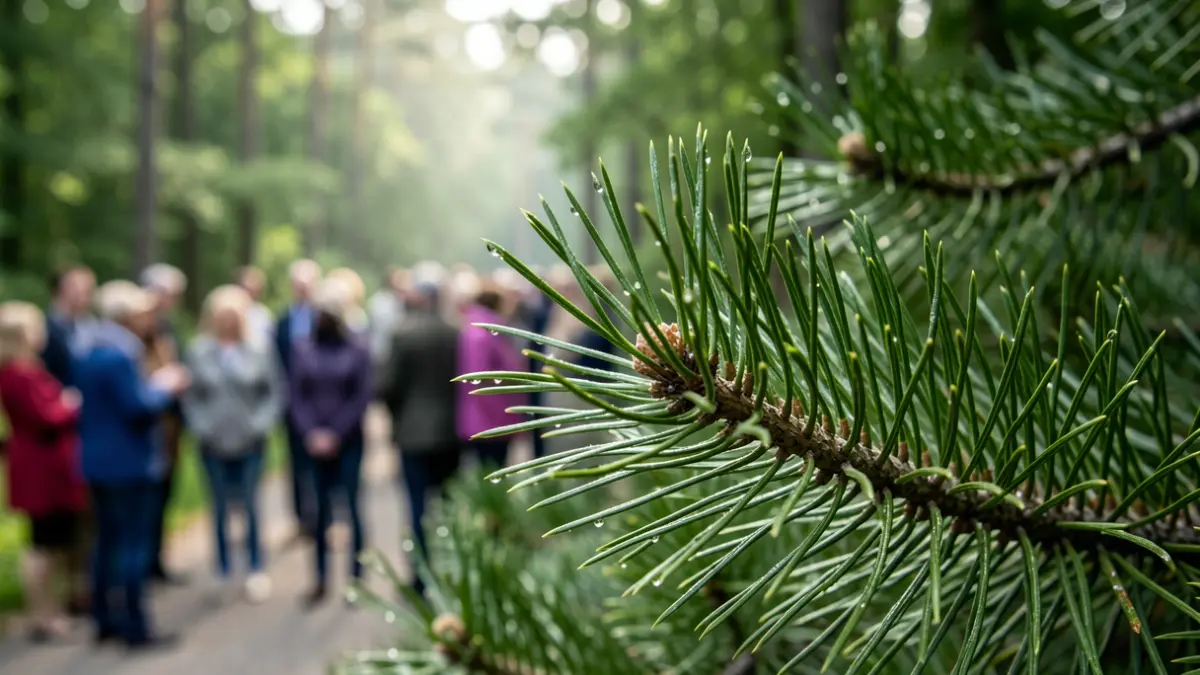
Close-up of pine needles with dew drops, blurred green forest background, soft morning light.
IA

Close-up of pine needles with dew drops, blurred green forest background, soft morning light.

An international study led by the University of Almería and published in Nature has determined that exotic pines in the Southern Hemisphere grow faster and better resist drought, challenging accepted ecological rules.

The new academic year at the University of Almería begins with a scientific finding of international impact. The prestigious journal Nature has published a study in which Ángel Fernández Cortés, a professor from the UAL's Department of Biology and Geology, participated. His results indicate that exotic pines in the Southern Hemisphere grow faster and better resist drought. This discovery contradicts one of the most accepted rules in ecology: the incompatibility between rapid growth and drought stress tolerance.
The research, coordinated by Álex Fajardo, Frida I. Piper, and Claudia Reyes Bahamonde from the Institute of Ecology and Biodiversity (IEB) and the University of Talca (Chile), involved collaborators from up to ten countries. The article, titled ‘Pines grow faster and are more drought resilient in the Southern Hemisphere’, was published on September 2nd.
Scientists emphasize that conifers planted in the Southern Hemisphere grow up to four times faster than their native Northern Hemisphere populations and tolerate drought better. This outcome breaks with decades of ecological theory that posited a trade-off between rapid growth and drought tolerance. The most likely explanation, according to Fajardo, is that these conifers escape their natural enemies (herbivores, pathogens, competitors) in the Southern Hemisphere, allowing them to accumulate reserves and improve their growth and resilience.
The research, which included analyzing the carbon isotopic composition of over five hundred wood samples, was based on studies from the Stable Isotope Laboratory at the University of Almería. Ángel Fernández Cortés explained that the isotopic signal was lower in trees from non-native areas, suggesting less limitation by stomatal conductance.
These findings have direct relevance for forest management in the face of increasing droughts. Álex Fajardo noted that understanding how these exotic conifers challenge fundamental ecological rules allows for exploring their potential to diversify landscapes and strengthen forest climate resilience. The study also suggests that active management of native secondary forests could improve their drought tolerance.
However, a necessary warning is issued: while reforestation with exotic species is often promoted globally as a solution to the climate crisis, there are key limitations, such as these species not necessarily thriving everywhere and frequently threatening local biodiversity, even becoming invasive. These aspects are crucial in designing climate mitigation strategies based on forest plantations.
Key data from the research include the comparison of growth data for nine conifer species from the Pinaceae family, which has no native representatives in the Southern Hemisphere. Native ranges analyzed were in the USA, Canada, Europe, Chile, Argentina, South Africa, and New Zealand. Southern Hemisphere plantations grew up to four times faster and were less affected by drought. Studied species primarily included Monterey pine, ponderosa pine, lodgepole pine, and Scots pine.

Based on information from the official source: Universidad de Almería - UALNews (Gabinete de Comunicación) (02/09/2026)