
The Laboratory of Social and Cultural Anthropology (LASC) and the Center for the Study of Migrations (CEMyRI) at the University of Almería have collaborated in organizing the Anthropology, Health, and Sexuality Sessions. This academic and outreach event aims to reflect on Anthropology's capacity for care and self-care, gender studies, healthcare mediation, and social inclusion. The activity is part of the Innovation Project ‘Community Intervention and University Training: an intercultural approach to elder care’, coordinated by Professor Montserrat Monserrat, and falls under Line 8 for the 2025-2026 biennium, focusing on ‘Teaching and Society – SDGs and Service-Learning’.
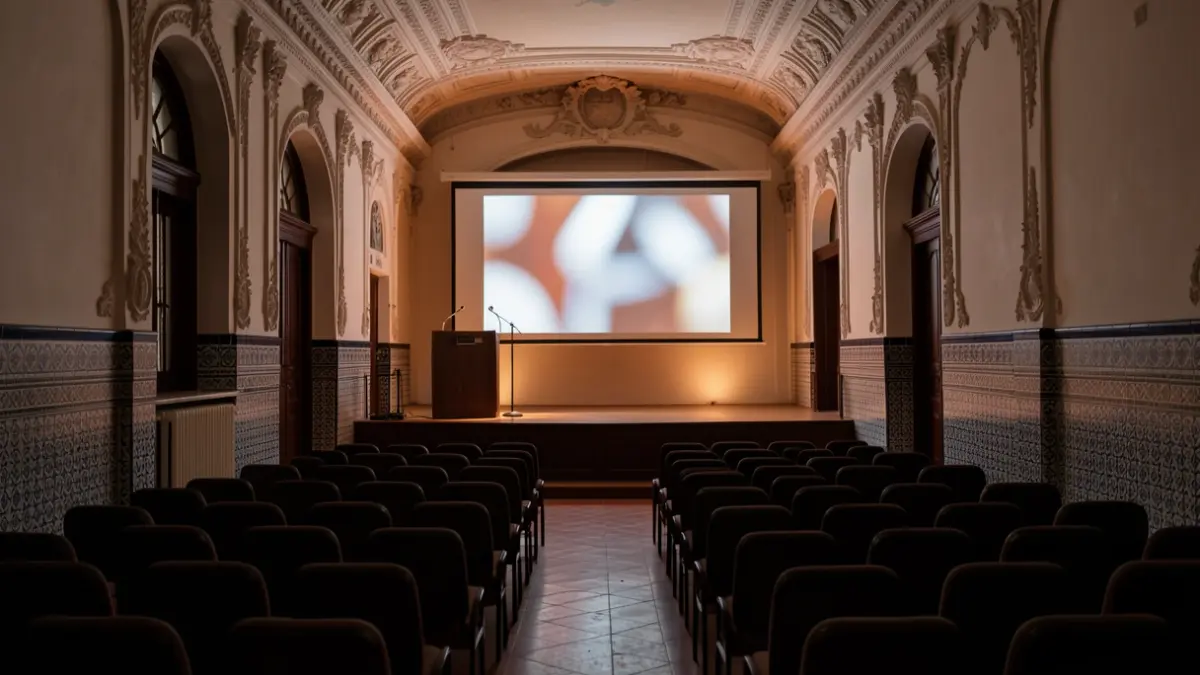
The event, held in the Degree Hall of the Faculty of Humanities and Education Sciences II, primarily gathered first-year students from various degree programs. The director of CEMyRI, Ángeles Arjona, along with Estefanía Acién, director of LASC, and Montserrat Montserrat herself, presented the event. Arjona highlighted the effort of the speakers and organizers, calling the experience “extraordinary” for giving a voice to those who might otherwise lack learning spaces. She emphasized the need for care with a transdisciplinary perspective, identifying the university as the ideal space for debate and reflection.
For her part, Estefanía Acién stressed that anthropology is not only a social science that provides deep insight into social problems but also a strategy for understanding the human being in their entirety. She highlighted the profound ethnographic experiences of the young researchers participating, citing as an example a study on widows and their sexuality—a topic considered taboo and hidden for centuries—and an ‘autoethnography’ of personal distress. Acién described the presented works as “spectacular” and noted the dual benefit of giving prominence to these researchers: capitalizing on their work and showing their peers that early-career academics are already publishing.
Montserrat Monserrat mentioned that this is the third year of this interdisciplinary initiative, involving students from various degrees whose professors are part of the teaching innovation project. This year includes Doctoral theses, aiming to increase the visibility of projects and connect the university with society. She noted the high motivation among students, particularly due to connections with external entities and associations that provide guidance for their research and offer practical insights for their future careers.
The coordinator emphasized the university's aim to contribute to a better society by making students aware that they can intervene and help improve the world and support vulnerable groups. Participants are given “carte blanche” to choose their collaborators from a range of entities, driven by their motivation to decide which aspects they wish to address, intervene in, or research. Monserrat thanked the Vice-Rectorate for Degrees and Teaching Innovation for supporting these enriching initiatives, highlighting that the sessions showcase the ethnographic research of young UAL researchers, demonstrating the power of Social Science and Anthropology in building societies with greater self-awareness and understanding of self-care, health, and sexuality.
Among the speakers, Isabel Sánchez, completing her degree in History, described the event as “a great opportunity” to gain a platform otherwise unavailable. She presented a study on female mourning over the last 60 years, focusing on rural areas and how social judgment acts as a form of control, despite the absence of physical coercion forcing widows into certain behaviors.
Following the opening, Nuria Sánchez and Estefanía Acién participated in a colloquium titled ‘Investigating (Oneself) to Heal: An ‘Autoethnographic’ Approach to Sexual Distress’. Subsequently, Isabel Sánchez and Montserrat Monserrat presented ‘Grey Widows and Honest Mourning: Tradition, Gender, and Secularization in Rural Almería over the Last 60 Years’, followed by a screening of a documentary by Sánchez and a discussion. Other presentations included ‘Trans Perspective in Care and Non-Care in Couples’ by Lucía Mellinas, ‘Intercultural Mediation and Healthcare Management: Implications, Challenges, and Opportunities’ by Rocío Ruiz, and ‘Food Security and Migration from an Intersectional Perspective: Dynamics in Human Mobility Contexts’ by Ammi Portillo.