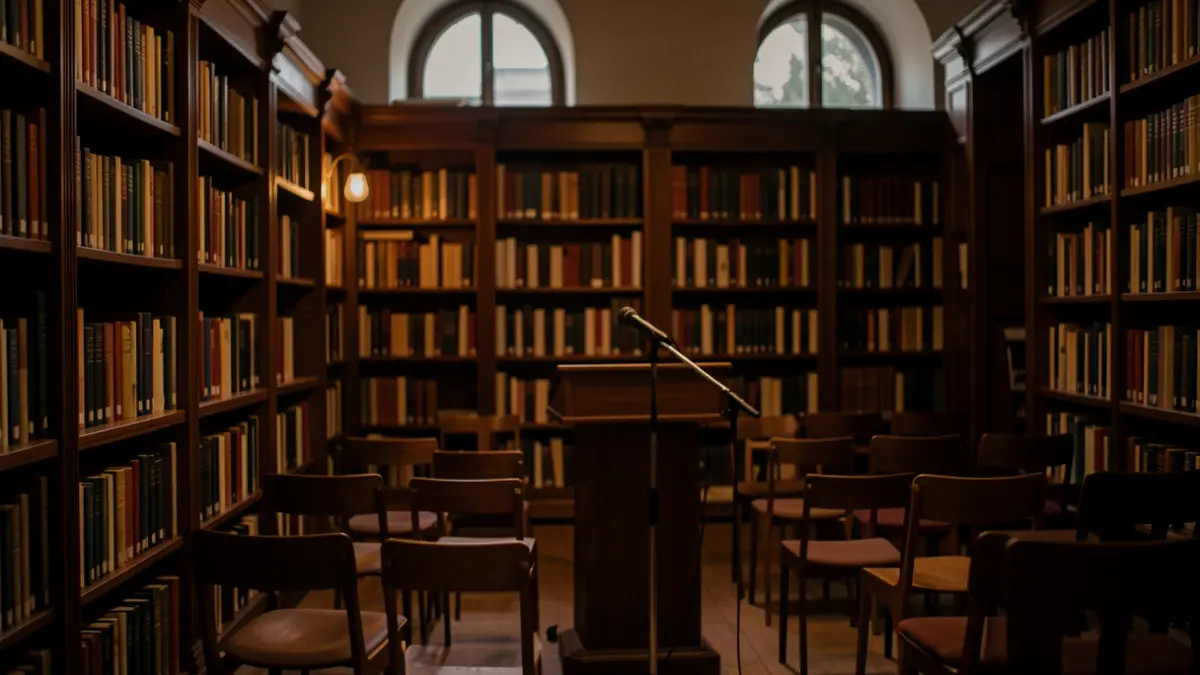
Cordoban author Pablo Álvarez shared details about his debut novel, The Need to Love, winner of the Azorín Prize, during a literary event held at the Biblioteca Villaespesa in Almería. The activity was part of the 'Diario de los Libros' series, organized by Diario de Almería.
Álvarez, who has also worked as an editor and literary agent, recounted how the impulse to write a novel arose after winning a prize in his childhood and his subsequent reflection on the passage of time and the fear of editorial judgment. "You either do it now or you won't do it anymore," he confessed about the moment he decided to dare to publish his work.
At 28, Álvarez was the youngest editorial director in Spain. Now, in his role as a writer, he feels "much more vulnerable than when I have to defend my authors' books," he admitted.
“"For me, love is the essence of life, and I believe we need to love and be loved. Hence, also everything related to the title. On the other hand, I think it has been greatly distorted, like many values we have lost. In the title, in a way, I wanted to make a call that we must love and treat each other with love and affection."
The author expressed his fondness for coming-of-age novels, highlighting their ability to portray the transitional moments from youth to maturity and how they allow the character to face "life's great challenges."
The inspiration for the novel came during a trip to the Spanish Academy in Rome, a Franciscan monastery managed by the Spanish government. There, Álvarez discovered the tomb of Beatriz Cenci, whose tragic story inspired part of the plot.
Álvarez described the novel as "very vindicative," calling for love in "all its forms," including a love story with a "threesome" that aimed to be sensual without being morbid. The work underwent a "very laborious task" of correction to ensure an "easy" read despite its "much content."
“"I always have a motto as an editor: if it moves you, it works."
He considers writing a novel an "act of bravery," especially when "comparing myself or placing myself alongside" other established authors. He initially considered self-publishing, but the emotion the manuscript evoked led him to submit it for the Azorín Prize.
Regarding the concentration required for writing, Álvarez admitted that he finds it "very difficult" to focus on a single task, as he is "involved in a hundred thousand things at once," from watching series to using social media.
The author emphasized his intention for the reader to "understand it well, enjoy it, and be moved" by the story. He detailed that the figure of Beatriz Cenci is commemorated annually in Rome, and her tragic story, including the Church's treatment of it, is reflected in the novel.
The novel addresses the concept of "guilt," a feeling that Álvarez acknowledges "torments him quite a bit." He sought for the characters to "vibrate, suffer, and have reasons to heal."