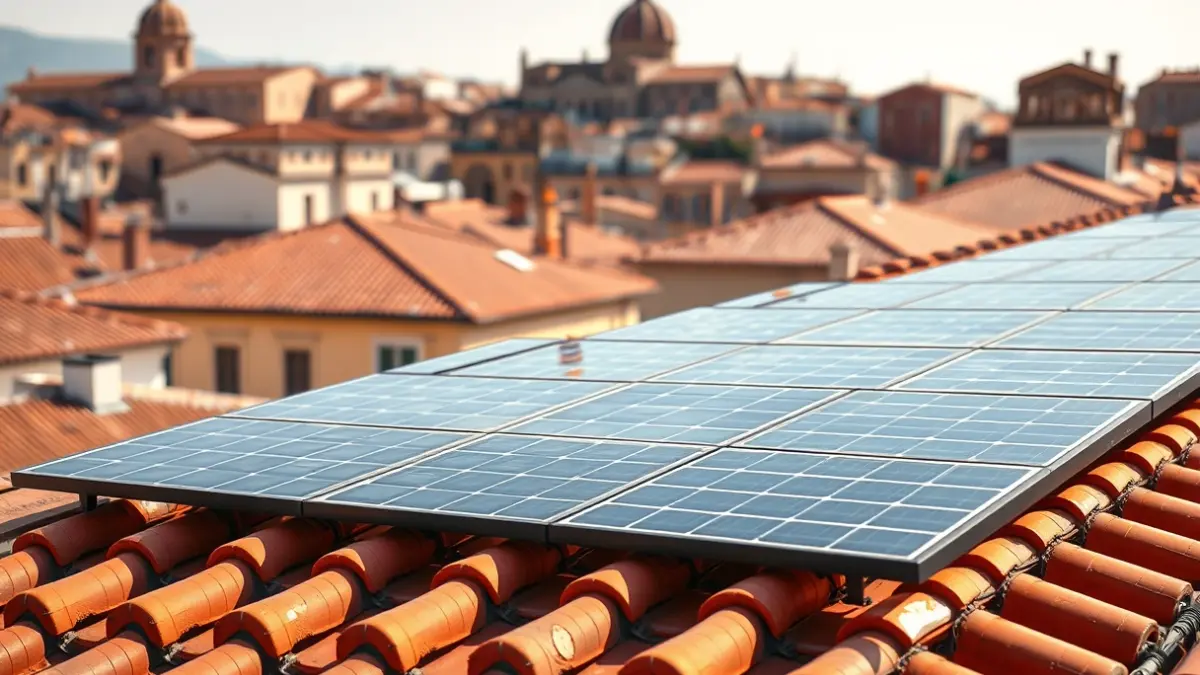
The document, released in February 2024 and shared with citizen groups for dialogue, establishes clear criteria for authorizing these systems. A key new requirement is a heritage impact study (EPI) to demonstrate no visual impact in permitted areas.
Since 2007, solar panel installation has been highly restricted in the Historic Quarter, especially in the area declared a World Heritage Site by Unesco, where they remain prohibited. The new guidelines will allow their placement in renovated areas, corresponding to buildings from the 19th to 21st centuries, provided visual impact requirements are met.
“"Solar panels will remain prohibited in Assets of Cultural Interest (BIC), in all buildings within the World Heritage area, in monuments, urban landmarks, and cataloged buildings included as protected assets in the Pepch."
For other properties in the heart of Córdoba, the plan modification requires applicants to demonstrate prior implementation of energy efficiency measures, ensuring that panel installation is not the sole option for improving efficiency. The heritage impact study must assess visual impact at three scales: immediate (street level), proximate (in the vicinity of BIC and nearby public spaces), and overall (from viewpoints and significant points of the Historic Quarter).
Each renewable energy project must involve a specialized cultural heritage technician. Both the project and the heritage impact study will be subject to a mandatory and binding report from the Urban Planning Management and the Junta de Andalucía. Only after obtaining both favorable resolutions can the responsible declaration for installation be submitted. Furthermore, it is specified that collectors cannot be placed on vertical surfaces and should preferably be located on lower secondary buildings, as far as possible from the main facade.